Dental Bridge Material Constructs
There are three basic types of materials for dental bridges:
- Porcelain fused to metal (PFM)
- All ceramics or full porcelain
- Full metal (Gold)
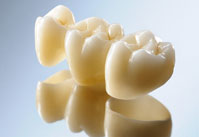
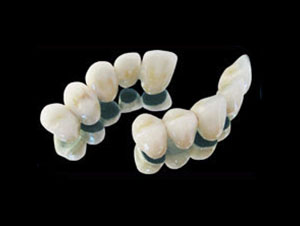
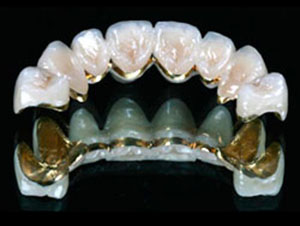
Porcelain-fused to Metal (PFM) Bridge Porcelain-fused-to-metal-alloy bridges are the standard materials used for tooth bridges. The external cap of the bridge is made from porcelain with an internal metal sub-structure.
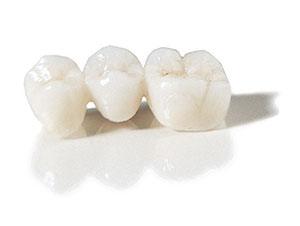
All Porcelain Bridge All ceramic bridges is an increasingly popular material bridge opted for good aesthetics. There is no metal within the tooth bridges.
All Gold Bridge Porcelain-fused-to-gold-alloy bridges is an ideal tooth bridges material. Gold has good adaptability to tooth structure and provides good aesthetics. However, gold alloy bridges tends to be more costly than other options.
All ceramic bridges, porcelain fused to metal (PFM) or PFM gold dental bridges are tooth colored. Posterior teeth normally have a higher chewing and grinding force compared to front teeth, this means PFM or ceramic zirconia dental bridges is likely recommended by your prosthodontist. Tooth bridges with gold, metal and zirconia are strong and tough.
All ceramic dental bridges are increasingly used today as they provide for good aesthetics and does not contain metal. Gold dental bridges are the most durable and offer the most precise fit but tends to be expensive.
See comparison between various dental crown materials in tooth bridges. There are various ranges of all ceramaic bridge systems offered at BIDC.